What’s going on?

August 23, 2009

I am well and truly back at school – buried up to my neck in meetings and cleaning up. I have taken up the challenge of throwing away all the old, dusty, irrelevant teaching materials. It is an enormous job but it is almost finished.

As for my PhD, I have committed myself to having the draft of my ethics application ready by the end of this week. It isn’t easy but I am trying to look at it as an opportunity to get more thinking done and to make more decisions about my study.
I have made contact with the chief scientist’s office in the Israeli Department of Education and I hope I won’t have trouble from there. I need to have all authorizations in place. I was naiive to think I didn’t need them.

8 days until the kids go back to school!


My heart is with all the Aussies fighting for their lives, their homes and the beauty of the country

February 9, 2009


I’ve been finding it difficult to concentrate in the past few days, I feel as though my heart and mind are always overseas, in Australia. I have been watching the horror on TV and on the Internet and I find myself crying each time I see what is going on.

I am joining millions of others, the world over, in wishing the wounded a full recovery and praying for a change in weather which will help the dedicated volunteers get control of the appalling situation.


My New Teacher Blog: teacherthoughts

October 17, 2008

Visit my new teacher blog: teacherthoughts which I opened with a ramble yesterday. I am hoping that the clear separation betweeen work and study will help me write more.


A real book in my hands

September 4, 2008

I have been getting up at 5 am every morning to read chapters of Fields of Play by Richardson which I mentioned here.

After two years of reading journal articles in PDF form printed on my printer or ebooks on my screen, it is satisfying to have a real book in my hands. I don’t know how I would have survived in the Masters program without digital texts but it really isn’t the same as physically searching the library and holding a new, fresh smelling book or a tattered, well read volume.

As far as the fascinating structure of the book, the engaging style and the relevant content go, I will write later. I will also relate to the process I went through with my thesis which already is clicking into place.

I’m off to a meeting.


Another kind of professional learning – volunteering

August 30, 2008


Another way I am continuing my professional learning is through my voluntary work as a reviewer of literacy articles for the Broader Middle East and North Africa Literacy Hub. The organization strives to improve basic literacy in those countries and in particular, to increase the number of girls attending primary school frameworks.

I am always interested by the materials I receive and meet a variety of literacy issues in my reading. Although I have been reviewing articles for the past two years, I have no idea how they found me to invite me to be a reviewer for this international project. The connection may be my International Reading Association membership.

p.s – Yet another kind of professional learning – as you can see, I have finally learned to hyperlink… about time. It was one of my goals before going back to school and I’m happy to report that I’ve done it.


Free image from:  http://www.everystockphoto.com/photo.php?imageId=2652745


Waiting!

August 28, 2008

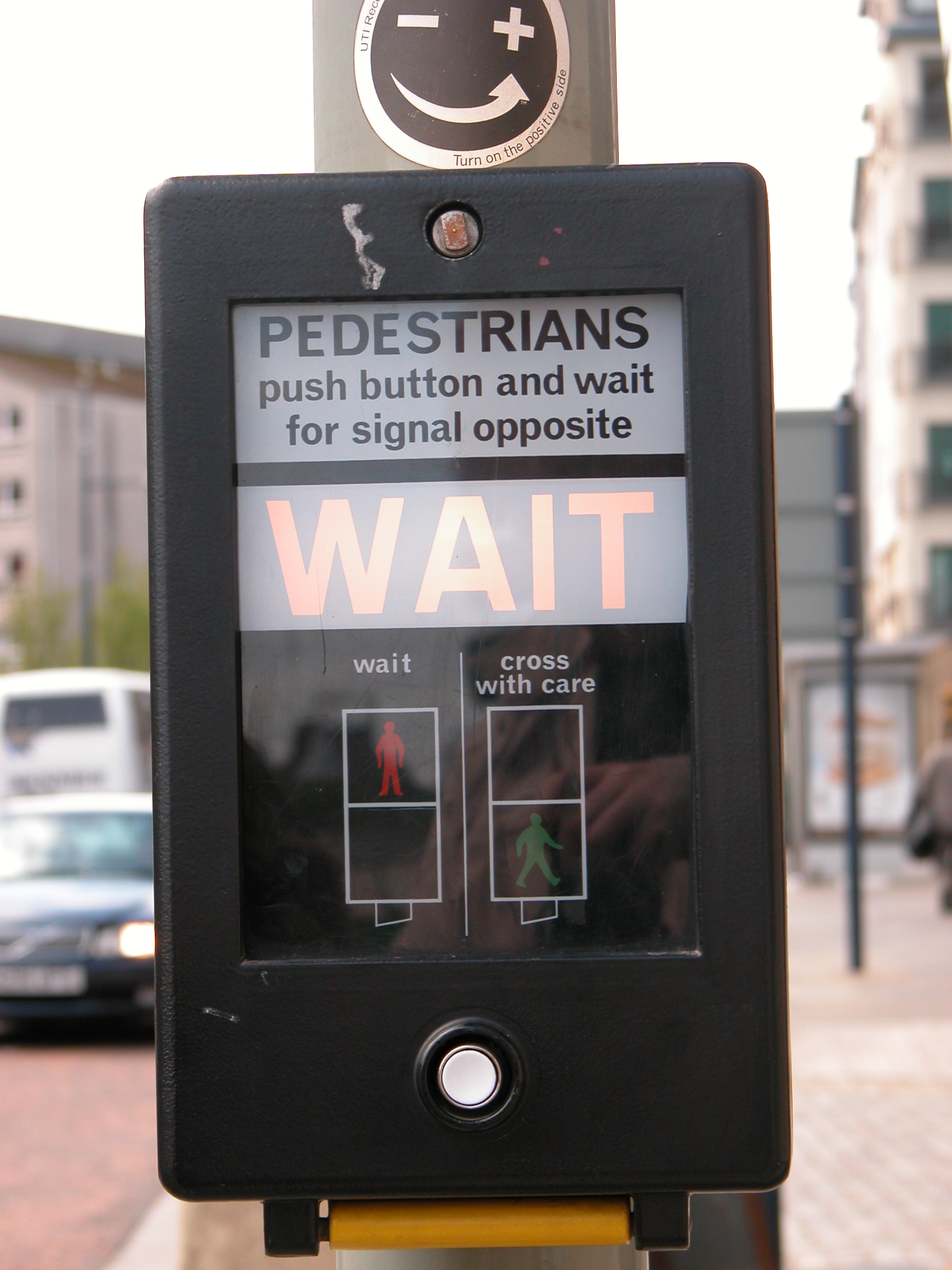
Waiting…waiting…waiting! I’ve had enough of waiting and it’s making me nervous!

What am I waiting for?

  • The grade for my thesis – I still have a few weeks to go before I’ll hear any feedback. There is nothing I can do to make the time pass and I certainly can’t do anything at this stage to improve my mark so…I will just have to keep waiting patiently! 
  • Narrative article that I sent to journal A – I haven’t heard anything – not even if they received it by email and I sent it off over a month ago. Wait! Maybe I should check if they got it? I don’t know if that isn’t being pushy. I will definitely keep waiting.
  • Narrative article that I sent to journal B – I know it was received and read and that it will probably be accepted. Again, I have to wait and see.
  • The beginning of the school year – In Israel, schools open on the 1st of September, next Monday. This year I will be working full time at our school (instead of leading PD in other schools two days a week). After school, one day a week, I will teach two PD courses for teachers, both according to the principles discussed in my thesis.

At school it will be a mixed year. I will have many hours in my role as vice principal, about 8 hrs in my role as head of teaching and leader of PD, 8 hours teaching ESL to two grade 6 classes, 2 hours teaching bible studies to grade 6, and 2 hours participating in a digital comics competition which brings together religious and secular pupils as they learn about other cultures and tolerance (last time one of my pupils came second in the final). I will also have 4 hours with groups of stronger pupils in our striving for excellence program. Together we will experiment with blogging – something new to me, our school and Israeli primary schools in general. I have lots of plans and am waiting for it all to begin.

 I still can’t decide if I should keep blogging here or open a new work blog. Let’s WAIT and see.


Free image from: http://www.imageafter.com/image.php?image=b12scripts000.jpg


Fields of Play / Richardson

July 31, 2008

I was so excited this morning when Richarson’s book arrived in the mail. My learning is continuing but first I will finish the fantastic novel I am enjoying, the first I have allowed myself to read in months.


Another Step…

July 30, 2008


I chose one of my thesis narratives and used it as a base for a journal article. I worked hard on it but found it difficult going back to my thesis and turning the text into something new. I will have to wait for ages now until I get some feedback. I would like to try to write another article before I go back to school but I still am not sure…


I am planning a blogging project for students in the special writing groups I will be in charge of this year. This is the first time we will be blogging at our school. Although I am excited about the prospect, I have more questions than answers at this stage.  

I am still trying to decide whether to blog my school stuff here or to start another site. Maybe I’ll start making some decisions soon.


Image from: http://i.pbase.com/u5/whiskey01/upload/40930568.footprint.jpg


Institutional Ethnography / Dorothy Smith

June 3, 2008


It is amazing that you can read a text and not really understand much of it and then reread it a month or so later and find that it is totally comprehensible. This is exactly what happened to me now with Smith’s article. I had no idea why my supervisor had recommended it to me – I just couldn’t see the link to my work and today it’s perfectly clear.

Smiths comparison between the state-of-mind which embraces us in our home life as women and the state-of-mind in the context of university.

Home – local, connected to a particular place and time, particular familiar people

Uni – impersonal, people are known through “printed names on texts”, classed

Institutional ethnography… begins with the issues and problems of people’s lives and develops inquiry from the standpoint of their experience in and of the actualities of their everyday living… It conceives of the social as actually happening among people who are situated in particular places at particular times and not as ‘meaning’ or ‘norms’ ” (p. 18-19).

Practitioners are seen as knowing best how to describe their experiences, they understand their own practice. It is the researchers role to investigate how this local knowledge joins knowledge created in other contexts.

Institutional ethnography is grounded in the understanding that each individual experiences events in a unique way.

People are always acting in a particular context – place and time.

“In Institutional ethnography, the researcher is permitted to learn, perhaps must learn, from each interview what may inform and change the subsequent.”

“But institutional ethnographers are actively seeking to be changed, to discover not only what they did not know but also, as they go about their work, how to think differently about what they are learning” (p. 28).

Smith, D.  E. (2002). Institutional ethnography. In T. May (Ed.) Qualitative research in action (pp. 17-52). London: Sage.

image: http://www.rcs.k12.va.us/gifted/gifted/Graphics/insight.jpg


The place of story / Kathy Carter

June 2, 2008

After reading the article I’m not sure I know where to start, there’s just so much relevant material contained in these few pages. It worries me that I didn’t come across this article in my searches, there are probably many more…

Carter deals with the political contexts of story telling and issues of gender, power, ownership and voice in particular.

She points out that narratives  have an implicit or explicit observer or witness who tells or recounts the events…” (p. 6).

 In my narratives,  I am telling my story, from my point of view. There is no doubt that other teachers would tell the same stories differently with different highlights and details.

“In constructing stories…authors attempt to convey their intentions by selecting incidents and details, arranging time and sequence, and employing a variety of codes and conventions that exist in a culture” (p. 6).

“…readers, in turn, seek coherence and causal connections among these incidents and conventions as they construct for themselves, often retrospectively, the meaning or theme of the story” (p. 6).

In 1986, Martin wrote:

“story represents a way of knowing and thinking that is particularly suited to explicating the issues with which we deal” (p. 6).

Carter explains that a story is “characterized by an intrinsic multiplicity of meanings” (p. 6).

The narratives I have written in the past few months are “coloured” by the intensive learning I have been doing.  As I learn new theories or gain new insights, I remember additional incidents and enrich my stories.

In teaching, knowledge is created through practice. “Teachers’ knowledge is, in other words, event structured (Carter & Doyle, 1987) and stories, therefore, would seem to provide special access to that knowledge” Carter (p. 7).

“teachers’ knowledge in its own terms is ordered by story and can best be understood in this way”(Elbaz, 1991, as cited by Carter, 1993, p. 7).

Olson contended that when teaching incidents are entered into narrative structure, they are made more understandable, lasting and presentable to others (1990, as cited in Carter, 1993).

Carter discusses using narrative to understand and develop thought. She quots Robinson and Hawpe (1986):

“Narrative thinking resembles other acts of comprehension and problem solving currently studied by cognitive psychologists” (p. 112, as cited in Carter, 1993, p. 7).

Carter uses the term “well remembered events” when describing significant teaching incidents.

Teachers store significant events as stories and through those narratives it is possible to recognize teacher knowledge and how it changes with additional experience. (Carter, 1993).

Most of the interest in teacher stories was in teachers telling their narratives to researchers or for research purposes. Carter (1993) cited Gudmundsdottir (1991) who encourages studying the stories told by teachers in everyday circumstances.

  • Blogging would probably be a good example of this.

The focus on teacher narratives is a focus on voices previously unheard – teachers, rather than academics or administrators, women, rather than men, speaking out on the issues which really concern them. (Carter, 1993).

  • Maybe again here, “somebody”  should be encouraging teachers to write these texts and in turn transform some of them to public texts (Parr, 2007).

Smith (19881, as cited in Carter, 1993) proposes that every story is created by a particular person in a distinctive context for a unique reason.

  • It follows that stories are different if they  are produced for reseacrh or other purposes. \

Carter asks

  • Do we tell our stories to support our theories or our research?
  • Do we tell our stories in ways that are suitable in a particular context?

Carter raises the problem of making generalizations from individual teacher stories. What we can do, she explains, is to search for patterns emerging from teacher stories and try to reach professional understandings from them.

Although teacher stories are always created in a particular context, highlighting the practice of a particular educator, they always have the capacity to spark new reflection and the creation of new stories.

Carter – If we believe in story analysis as a means of creating a knowledge base for educators, significant efforts must be made to present ourselves as valid researchers in order to be accepted by academia and policy makers.


Carter, K. (1993). The place of story in the study of teaching and teacher education.  Educational Researcher, 22(1), 5-12. Retrieved from http://links.jstor.org/